Views: 0 Author: Site Editor Publish Time: 2026-07-06 Origin: Site

Two polyester fabrics can look equally vibrant at first yet age very differently under sunlight, washing, and repeated use. The reason often comes down to when color enters the material. In a dope dyed vs piece dyed comparison, one method builds color into the fiber during spinning, while the other dyes the finished fabric later.
That difference affects more than appearance. It can influence colorfastness, water and energy use, production flexibility, and the suitability of the fabric for outdoor, automotive, apparel, or other applications. Understanding these trade-offs makes specification and sourcing decisions much easier.
Dope dyeing, also called solution dyeing, moves coloration to the fiber-manufacturing stage. A concentrated color masterbatch is blended with the polyester polymer while it is molten, and the colored melt is then extruded through spinnerets to form filaments. After drawing or texturing, those filaments can be knitted or woven without requiring a conventional dye bath solely to create the base color. The pigment or colorant is therefore incorporated before fiber extrusion, making coloration part of the fiber-forming process.
The simplified route looks like this:
Polyester raw material → color masterbatch → melt mixing → spinning/extrusion → colored filament → texturing → fabric production
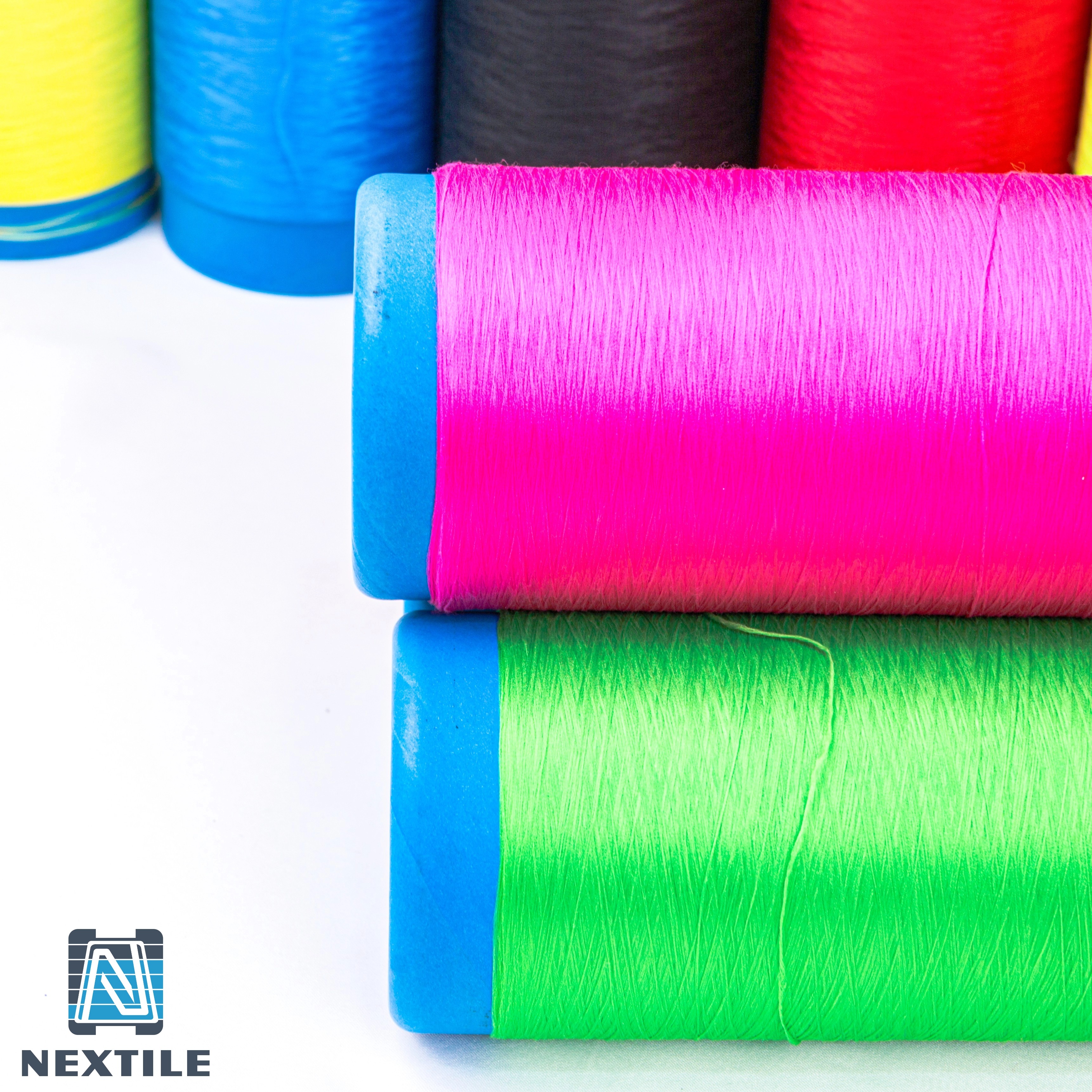
Nextile’s high-colorfastness dope-dyed color yarn uses this type of masterbatch-based process, with color introduced into the polymer melt during spinning or extrusion. The resulting yarn is designed for applications where resistance to UV fading, washing durability, and reduced wet coloration are important considerations.
This upstream coloration changes production planning as well as textile performance. Because the filament already has its final color when it is produced, shade decisions generally need to be made earlier than they would with greige fabric intended for later piece dyeing. That can work particularly well for established colors and repeat programs, but it provides less opportunity to postpone the color decision until the fabric is already in inventory.
Piece-dyed polyester follows the opposite sequence. Undyed yarn is first knitted or woven into greige fabric, after which the entire fabric is colored in a dyeing machine. Polyester is commonly colored using disperse dyes at high temperature, often around 120–130°C, because elevated temperatures help the dye diffuse into the PET structure.
Polyester filament → knitting/weaving → greige fabric → disperse dyeing → clearing/rinsing → finishing
This point also corrects a common oversimplification in discussions of dope dyed vs piece dyed polyester. Piece dye is not merely a colored coating resting on the outside of a filament. Disperse dye molecules diffuse into polyester during the high-temperature process, although the coloration mechanism is still fundamentally different from dispersing pigment through the polymer before extrusion.
The major commercial benefit is timing. A manufacturer can hold greige fabric and decide later whether a production lot should become navy, red, grey, or another shade, giving piece dyeing considerable flexibility when demand is difficult to forecast.
Colorfastness describes resistance to color change or transfer under specific conditions, so it should never be treated as a single universal property. For many applications, however, resistance to light is where the dope dyed vs piece dyed choice becomes especially important. Dope-dyed synthetic fibers are generally valued for strong colorfastness because the colorant is incorporated during fiber formation rather than introduced through a subsequent wet-dyeing operation.
That advantage matters most when a textile spends long periods in sunlight. Outdoor furniture covers, shade materials, automotive textiles, luggage, and performance accessories can remain structurally usable while becoming commercially unacceptable because their original shade has visibly changed. For those products, lightfastness is not a cosmetic specification added at the end of development; it can influence useful product life.
Still, “dope dyed” should not be translated into “cannot fade.” Pigment selection, concentration, polymer formulation, UV stabilizers, shade depth, fabric construction, and actual exposure all influence the result. Standardized lightfastness testing, such as ISO 105-B02, provides a more useful basis for evaluating performance than broad descriptions such as “UV proof.”
Wash durability is another reason dope-dyed polyester is often selected for demanding programs. Since coloration is established during fiber manufacture, the pigment is integrated into the filament rather than applied through a later wet coloration stage. This structure can support strong resistance to repeated washing when the yarn formulation and subsequent textile processing are properly controlled.
Piece-dyed polyester, however, should not automatically be classified as low-fastness material. A properly selected disperse dye, suitable temperature profile, adequate clearing, and well-controlled finishing can produce strong wash and rubbing performance. The final specification should therefore be based on the required test result rather than the dyeing label alone.
Performance Question | Dope-Dyed Polyester | Piece-Dyed Polyester | What the Buyer Should Check |
Long light exposure | Often a key strength | More dependent on dye and process selection | Lightfastness test result |
Repeated washing | Generally strong | Can also perform well when correctly processed | Wash fastness |
Dry/wet rubbing | Depends on formulation and construction | Depends on dyeing and finishing quality | Crocking/rub test |
Repeat shade matching | Controlled through masterbatch formulation | Controlled through dye recipe and processing | Approved tolerance and production sample |
Water use is one of the most important differences in a dope dyed vs piece dyed polyester assessment because conventional piece coloration is inherently a wet process. The fabric has to be processed in dye liquor, and additional water can be required for post-dyeing clearing, rinsing, and machine cleaning. High-temperature polyester dyeing also needs thermal energy to bring the system to the conditions required for effective disperse-dye diffusion.
Dyeing is only part of the resource requirement. Depending on the recipe, wet processing may also involve dispersing agents and other auxiliaries, while the resulting water stream has to be managed after coloration. Dark or heavily built-up shades may require more intensive post-dyeing cleaning than simpler recipes.
This is why comparing only the liters inside the main dye bath can understate the practical difference between the two routes. A useful water comparison should consider the coloration process as a sequence, including the supporting washing and cleaning operations needed to deliver saleable fabric.
Dope dyeing changes that sequence by removing the separate aqueous dye bath used to create the base color. Instead of manufacturing undyed polyester and then transporting it through another coloration stage, the pigment is introduced before extrusion. As a result, water consumption and wastewater generation associated specifically with conventional wet coloration can be substantially reduced.
The operational benefit extends beyond the volume of dye liquor that disappears. Eliminating a conventional coloration bath can also reduce associated heating, rinsing, chemical use, and effluent treatment requirements. That does not automatically make every dope-dyed textile environmentally preferable in every life-cycle category, but it addresses one of the most resource-intensive stages associated with conventional coloration.
Nextile dope-dyed yarn is produced without a conventional aqueous dye bath during the coloration stage. This approach can reduce the water, chemicals, heating, and wastewater treatment associated with conventional polyester dyeing while still allowing the yarn to proceed through normal downstream textile manufacturing processes.
The strongest case for dope-dyed polyester appears when color durability is an actual performance requirement rather than an optional benefit. Products exposed to strong sunlight, frequent washing, repeated production cycles, or long service periods gain more value from a coloration route designed around stable, integrated color. Reducing wet coloration can provide an additional advantage when the sourcing program has specific water or wastewater objectives.
Common candidates include:
● Outdoor furniture, awnings, shade textiles, and other sun-exposed fabrics
● Automotive and transportation textiles expected to remain in service for years
● Outdoor bags, luggage, uniforms, and performance accessories
● Contract textiles that need consistent recurring shades across multiple orders
● Wash-intensive products where appearance must remain stable through repeated care cycles
● High-volume programs where avoiding a separate wet-dyeing stage supports manufacturing targets
Stable shades used season after season are especially compatible with the economics and planning logic of dope coloration because there is less need to delay the color decision. Black is a straightforward example: if large volumes of black yarn are repeatedly required, producing the color at the spinning stage can align well with both performance and production planning.
Nextile’s GRS-certified recycled dope-dyed polyester DTY, available in a 75D/36F dope-dyed black specification, combines recycled polyester feedstock with color introduced during fiber production. Recycled content and dope coloration remain separate attributes: one concerns material sourcing, while the other concerns the method used to create the yarn’s color.
Piece dyeing becomes more attractive when the largest commercial risk is choosing the wrong color too early. Seasonal collections, fashion-led programs, small shade quantities, and unpredictable sales mixes often benefit from producing greige fabric first and allocating it to colors only after demand is clearer. That postponement can reduce the amount of finished colored inventory committed before orders are known.
The method also gives product teams more freedom to revise shades during development. A fabric platform can potentially support multiple colorways without requiring each shade to be locked into the yarn-spinning schedule from the beginning. When speed of color response matters more than maximizing resistance to prolonged UV exposure, that flexibility can outweigh the additional wet processing.
Indoor products are another logical candidate when severe sunlight exposure is not part of the use case. Provided that the required wash, rubbing, and other fastness tests are met, piece-dyed polyester can be a technically sound choice rather than a lower-quality substitute.
A sourcing decision becomes easier when the dyeing route is treated as an engineering and production variable rather than a marketing label. Before specifying dope dyed vs piece dyed, work through five questions:
1. Will the product face sustained sunlight? Regular outdoor exposure increases the value of strong lightfastness and makes dope dyeing more compelling.
2. What fastness properties must the finished textile pass? Specify light, washing, rubbing, chlorine, or other tests according to the actual use environment.
3. Will the same shade be reordered over several seasons? Stable recurring colors favor earlier color commitment, while frequently changing palettes favor later dyeing.
4. How much flexibility is required in color quantities? If demand by shade is difficult to predict, keeping greige fabric available for later piece dyeing may lower inventory risk.
5. Is reducing dye-bath water and wastewater a defined target? If it is, eliminating conventional wet coloration gives dope dyeing a clear process-level advantage.
The result does not have to be the same across an entire product range. A manufacturer might use dope-dyed yarn for permanent outdoor colors while choosing piece-dyed fabric for seasonal indoor shades. What matters is linking the coloration route to the actual performance requirement, order pattern, and environmental objective instead of applying one method indiscriminately.
The dope dyed vs piece dyed decision ultimately depends on how the finished polyester will be used. Dope dyeing is better suited to applications that prioritize long-term color stability, reduced wet processing, and repeat production, while piece dyeing remains valuable when shade flexibility and later color decisions matter more.
For manufacturers evaluating these trade-offs, Shanghai Nextile Fiber Technology Co. Ltd. offers dope-dyed and recycled polyester yarn options for knitting and weaving applications, helping buyers match yarn specifications with performance, sustainability, and production requirements rather than selecting a dyeing method on color alone.
A: Dope dyeing adds color during fiber formation, while piece dyeing colors already knitted or woven polyester. This difference affects colorfastness, water use, production planning, and shade flexibility.
A: Dope-dyed polyester generally offers stronger resistance to sunlight and repeated washing. However, actual performance also depends on pigment or dye selection, fabric construction, processing quality, and exposure conditions.
A: Color is introduced into the polymer before extrusion, eliminating the separate aqueous dye bath required in conventional piece dyeing and reducing associated rinsing, cleaning, and wastewater generation.
A: Not necessarily. Properly selected disperse dyes and controlled processing can provide good colorfastness. Piece-dyed performance should be evaluated through relevant light, wash, and rubbing fastness tests.
A: Dope-dyed polyester suits outdoor, long-life, and repeat-color applications. Piece dyeing is often more practical when seasonal shades, smaller color quantities, or late-stage color decisions are priorities.