
Views: 0 Author: Site Editor Publish Time: 2025-09-05 Origin: Site

Nylon is one of the most widely used synthetic fibers in the world. From sportswear and outdoor gear to carpets, ropes, and industrial applications, it has become an essential part of modern life. Its popularity comes from its strength, flexibility, abrasion resistance, and quick-drying properties—qualities that make it indispensable across many industries.
However, the increasing demand for nylon has raised important questions about its environmental footprint. Like many synthetic fibers, nylon is made from petroleum, requires significant energy during production, and contributes to pollution through waste and microplastics. At the same time, researchers and manufacturers are working to make nylon more sustainable, with recycling technologies and bio-based alternatives gaining momentum.
This article explores both sides of nylon’s story: its environmental impact and the potential of recycling to shape a more responsible future.
Nylon was invented in the 1930s by DuPont and became the world’s first fully synthetic fiber. Originally created to replace silk, it quickly found applications in stockings, military gear, and later, in countless consumer and industrial products.
The reason nylon remains so popular lies in its properties:
Strong and durable: Withstands heavy use and stretching.
Lightweight: Ideal for clothing and travel gear.
Abrasion-resistant: Perfect for outdoor gear and high-friction applications.
Moisture-resistant: Dries quickly, making it useful in sportswear and swimwear.
Versatile: Can be blended with other fibers to create fabrics with specialized qualities.
Because of these qualities, nylon has spread into nearly every corner of daily life. Yet its benefits come at an environmental cost that deserves close attention.
Nylon’s environmental impact can be assessed at different stages of its life cycle: from raw material extraction to production, use, and disposal.
Nylon is made from petroleum, a non-renewable fossil fuel. Extracting petroleum contributes to greenhouse gas emissions, habitat destruction, and oil spills. Since nylon production relies heavily on these resources, it ties the fiber directly to fossil fuel dependency.
Producing nylon is energy-heavy, more so than many other synthetic and natural fibers. For example, the process of making nylon-6,6 requires large amounts of heat and pressure, which consumes significant electricity or fuel. This leads to high carbon dioxide emissions, contributing to climate change.
The production of nylon involves chemicals such as adipic acid and hexamethylenediamine. The manufacturing process releases nitrous oxide, a greenhouse gas nearly 300 times more potent than carbon dioxide. Although technology has improved to control these emissions, nylon production remains one of the largest industrial sources of nitrous oxide.
Like other synthetic fibers, nylon sheds microplastics when washed. These tiny plastic particles flow into wastewater, eventually reaching rivers, lakes, and oceans. Microplastics harm marine life, disrupt ecosystems, and can even enter the food chain, posing risks to human health.
Nylon is not biodegradable. Discarded nylon products, whether clothing or fishing nets, can persist in landfills and oceans for decades. Ghost nets made of nylon, abandoned in the sea, are especially damaging—they trap marine animals and damage coral reefs for years after being discarded.
Together, these factors make nylon a fiber with a significant environmental footprint.
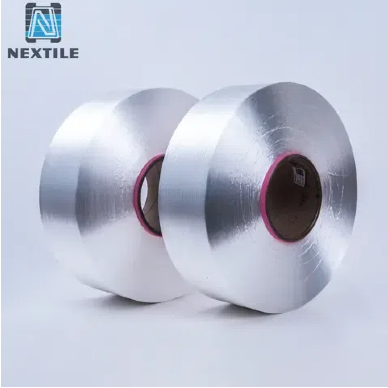
Despite its environmental challenges, nylon has a significant advantage: it can be recycled. Recycling not only reduces waste but also lowers dependence on virgin petroleum and decreases energy consumption.
In mechanical recycling, nylon waste—such as fabric scraps or fishing nets—is cleaned, shredded, and melted to create new fibers or pellets. This method is straightforward but can result in fibers of lower quality compared to virgin nylon.
Chemical recycling breaks nylon down into its raw components using processes like depolymerization. For example, nylon-6 can be broken down into caprolactam, which can then be repolymerized into new nylon with the same quality as virgin material. This closed-loop process has great potential because it allows endless recycling without losing performance.
Recycled nylon often comes from:
Discarded fishing nets collected from oceans.
Industrial waste from fabric manufacturing.
Used carpets and textiles that would otherwise end up in landfills.
By turning waste into raw material, recycling prevents pollution and reduces demand for new petroleum.
Recycling nylon offers multiple environmental and economic advantages:
Reduces Waste: Prevents nylon products like carpets, textiles, and fishing nets from ending up in landfills or oceans.
Conserves Resources: Lowers the need for virgin petroleum and reduces dependence on fossil fuels.
Cuts Greenhouse Gas Emissions: Requires less energy than producing virgin nylon, especially when using chemical recycling methods.
Maintains High Quality: Chemical recycling ensures the recycled fiber performs just as well as new nylon.
Encourages Circular Economy: Recycling helps close the loop by keeping materials in use longer, instead of disposing of them after a single life cycle.
While promising, nylon recycling faces challenges that limit its widespread adoption.
Complex Collection Systems: Gathering nylon waste, especially post-consumer items like clothing or fishing nets, is logistically difficult.
High Costs: Recycling processes, particularly chemical recycling, require advanced technology and remain more expensive than producing virgin nylon.
Quality Control: Mechanical recycling can reduce fiber quality, making it less desirable for certain high-performance uses.
Limited Infrastructure: Many regions lack the facilities to recycle nylon effectively, leading to continued reliance on virgin production.
Overcoming these obstacles will be essential for nylon recycling to reach its full potential.
Manufacturers and researchers are actively working to improve nylon’s sustainability, both through recycling and new materials.
Some companies already produce regenerated nylon fabrics made entirely from recycled materials like fishing nets and carpets. These regenerated fibers match the strength and quality of virgin nylon but with a significantly lower environmental footprint.
Instead of petroleum, bio-based nylons are created using renewable resources such as plant oils or biomass. While still in development, these alternatives could reduce reliance on fossil fuels and lower carbon emissions.
Collaborations between governments, NGOs, and manufacturers are creating systems to collect nylon waste, especially abandoned fishing nets. These initiatives not only supply raw material for recycling but also clean up oceans.
Growing awareness of textile waste and microplastic pollution has led more consumers to seek sustainable options. Demand for recycled nylon products encourages companies to invest in greener practices.
The future of nylon will likely be defined by innovation and responsibility. As industries adopt more advanced recycling technologies and bio-based solutions, nylon’s environmental impact can be greatly reduced.
Expanded Recycling Infrastructure: Wider availability of chemical recycling facilities will make it easier to recycle nylon at scale.
Integration into Fashion and Industry: More brands are committing to using recycled or regenerated nylon in apparel, footwear, and accessories.
Circular Economy Models: Manufacturers may adopt systems where old products are collected and recycled into new ones, closing the loop entirely.
If these changes continue, nylon could transform from a problematic fiber into a model for how synthetic materials can be managed sustainably.
Nylon is a remarkable fiber that combines strength, durability, and versatility, making it invaluable in everything from sportswear and outdoor gear to carpets and industrial applications. Yet its environmental impact—through fossil fuel dependence, greenhouse gas emissions, microplastic shedding, and long-lasting waste—cannot be ignored.
The good news is that nylon has strong recycling potential. Both mechanical and chemical recycling methods offer pathways to reduce waste, conserve resources, and lower emissions. Along with innovations in bio-based alternatives, recycling represents a vital step toward making nylon more sustainable.
As industries move toward greener practices, companies like Shanghai Nextile Fiber Technology Co. Ltd. are leading efforts to develop advanced nylon fibers and fabrics that balance high performance with environmental responsibility. With such initiatives, nylon’s future could be one where innovation and sustainability work hand in hand.


